Don't untie Jack
Little House on the PrairieDon't untie Jack is a rule of absolute obedience that Charles Ingalls lays down for his daughters Laura and Mary during the family's first months in Indian Territory, and it is one of the most consequential commands in the early part of the narrative. The rule is simple in form but heavy with meaning: when Pa ties the family dog Jack to the stable, the girls must never release him, no matter what happens. Behind this small domestic instruction lies the entire precarious position of the Ingalls family as white settlers living on land that belongs to the Osage Indians, where a single dog bite could ignite a conflict far beyond the little house on the prairie.
The Origin of the Rule
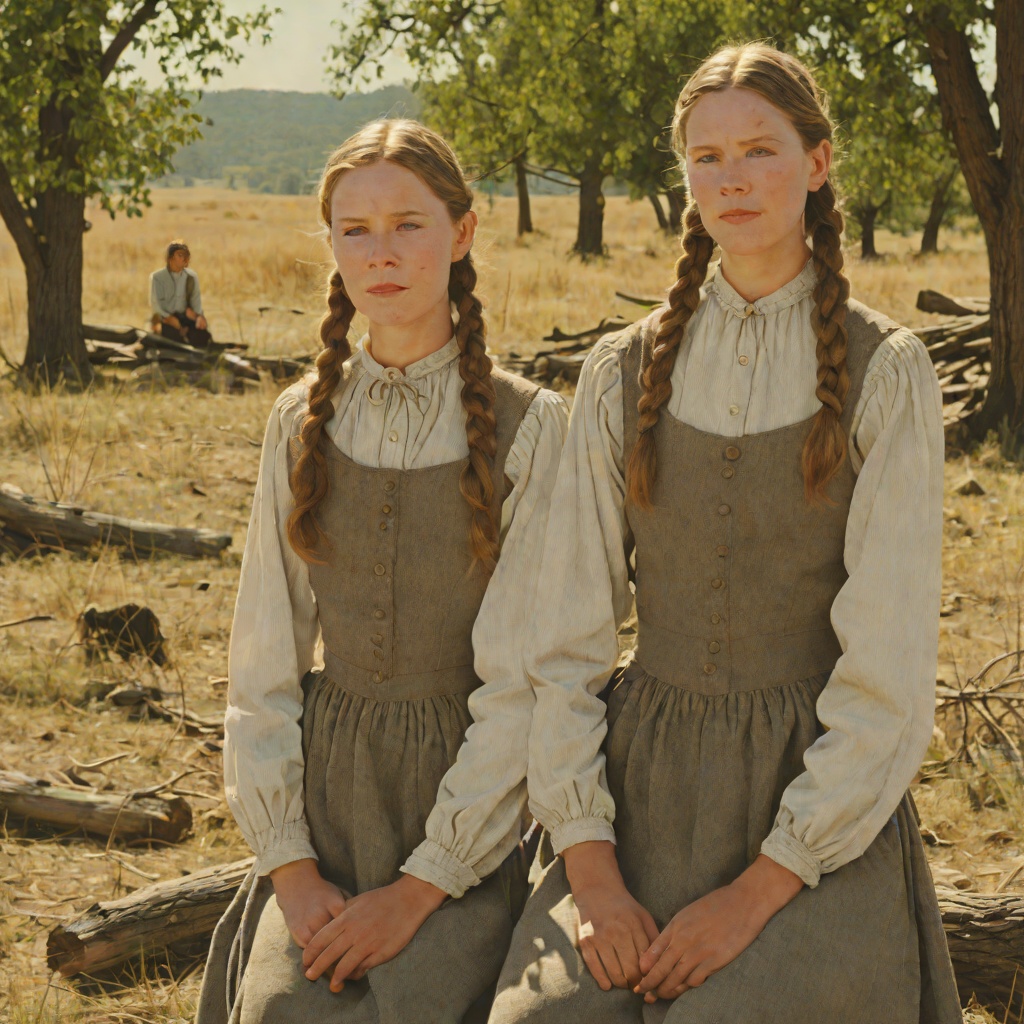
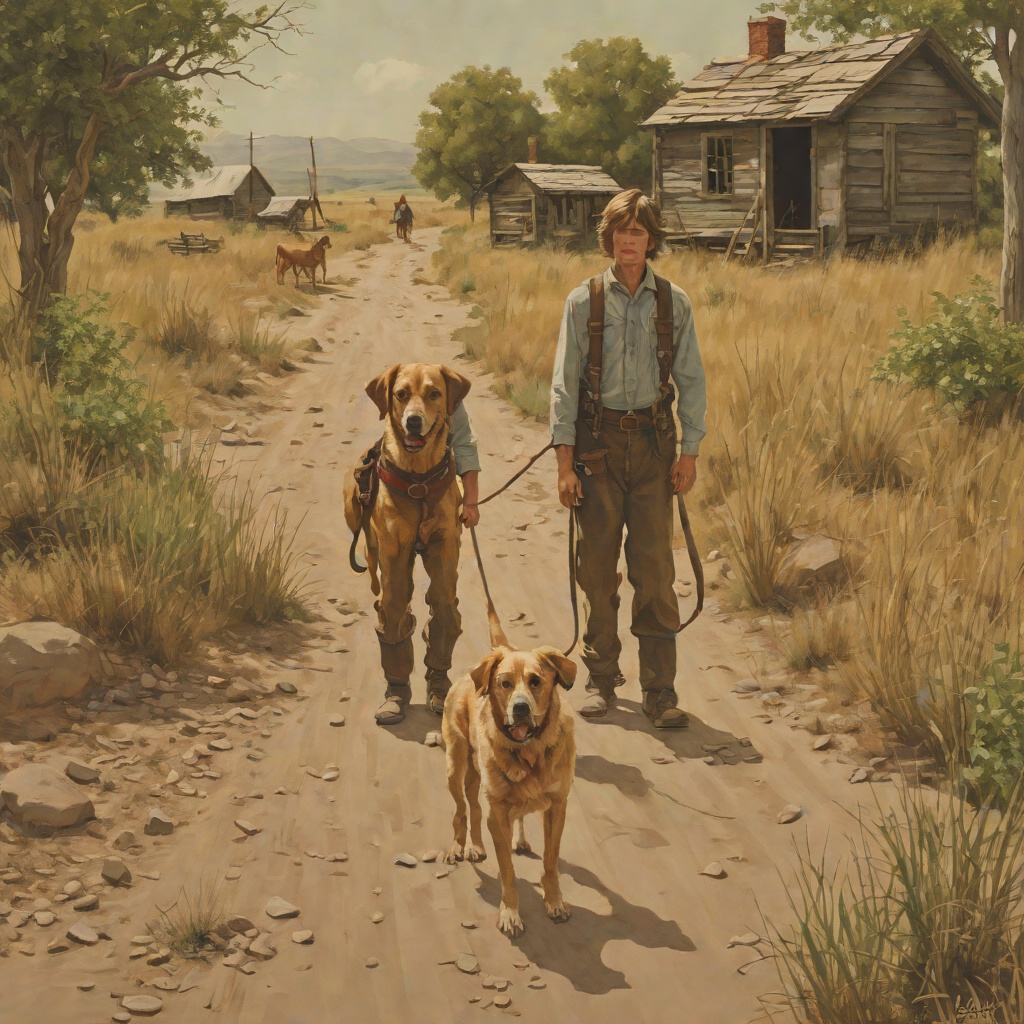
The rule emerges from a moment of deliberate precaution. Early one morning, Pa takes his gun and goes hunting, and Jack wants to go with him. Pa refuses, tying the dog to the stable instead, and explains his reasoning directly: "No, Jack," he says. "You must stay here and take care of the family." Then he turns to Mary and Laura with the explicit instruction, "Don't untie him, girls." The command is given casually, almost as an afterthought, but it carries the weight of Pa's understanding that the family's safety depends on the dog remaining exactly where he is put. Poor Jack lies down, miserable, and the girls stay by the stable all morning trying to play with him, but he is inconsolable. The scene establishes the rule as a test of the girls' obedience as much as a practical measure for the dog's restraint.
The rule is immediately tested. While Laura is talking to Jack with his head on her leg, the dog suddenly stands up and growls, the hair on his neck standing straight up and his eyes staring red and angry. Laura is afraid, because Jack has never growled at her before. When she looks over her shoulder in the direction of his gaze, she sees two wild men coming closer on the Indian trail. The Indians enter the house, and the family endures their presence in silence and fear.
The Confession and the Hardening of the Rule
Later, when Laura and Mary are helping Pa clean prairie chickens, Laura casually remarks, "I wanted to untie Jack to eat those Indians." The confession transforms the rule from a practical precaution into a matter of grave moral and political consequence. Pa lays down his knife and asks in a terrible voice, "Did you girls even think of untying Jack?" Laura drops her head and whispers, "Yes, Pa." When Pa asks, in an even more terrible voice, "After I told you not to?" Mary whispers, almost crying, "Yes, Pa."
For a moment Pa is silent. Then he speaks in his angry voice and delivers the rule in its fullest form: "After this, you girls must do as I say. You must always obey me. Do you hear?" The girls whisper their assent, but Pa is not finished. He explains the stakes with terrible clarity: "If the Indians come again and Jack is untied, he'll bite them. And then there will be trouble. Bad trouble. Do you understand?" The girls say yes, but the narrator notes that they do not understand. Pa closes with the simple principle that governs the entire household: "Do as you're told, and you'll be safe."
This moment transforms the rule from a single instruction into a general law of the family's survival. The rule is no longer just about Jack; it is about the necessity of absolute obedience in a world where the consequences of disobedience are unknowable to children but all too real to their parents. Pa's anger is not cruelty but fear translated into discipline.
The Rule Becomes Permanent
The rule is reinforced by a later incident that nearly ends in disaster. When an Indian sees Jack, he lifts his gun and points it straight at the dog. Pa runs to the trail and pulls Jack out of the way just in time, and the Indian rides on. "We were lucky that time!" Pa says. "Well, it's his path. It was an Indian trail long before we came." After that, Jack is always tied up. He grows crosser and crosser, but there is nothing Pa can do about it. "If Jack hurts an Indian," he says, "there will be bad trouble."
The permanence of the rule marks a shift in Jack's role in the family. Earlier in the journey, Jack had walked along under the wagon all the way from Wisconsin, a faithful companion who had been with them through every mile. When wolves howled on the prairie, Pa had wished Jack was still with them, and the dog's absence during the crossing of the flooded creek had been a source of grief. Now the same dog who was once the family's protector has become a potential source of danger, and the rule that keeps him tied is a constant reminder of the family's vulnerability.
The Rule's Place in the Family's Life
The rule operates within a broader system of obedience that shapes the girls' daily existence. When Laura asks if she can get out and run behind the wagon during the long journey, Ma answers simply, "No, Laura," and when Laura complains that she is hungry and wants to camp, Ma says only, "Laura," and the girl understands she should stay quiet. At the table, the children must not speak until they are spoken to. When Laura runs around shouting while Baby Carrie is sleeping, Ma scolds her for shouting "like an Indian" and notes that the girls are getting "as brown as Indians in the sun." The same discipline that keeps Jack tied keeps the girls in their place, and the rule about the dog is the most urgent instance of a general principle: obedience is survival.
The rule also reveals the family's complicated relationship with the Indians who surround them. Pa's fear is not that the Indians will harm the family but that Jack will harm the Indians, and that the harm will bring retaliation. The rule is thus an acknowledgment of the family's dependence on the goodwill of the Osage people whose land they occupy. It is a small, daily act of appeasement, repeated every time Pa ties the dog to the stable.
The Rule's Enduring Significance
The rule about Jack is never formally revoked. It simply becomes part of the fabric of life in the little house, one of the many constraints that define the family's existence on the prairie. When the Indians finally leave the prairie in a long procession, the rule loses its urgency, but it has already done its work: it has kept the family safe through the most dangerous months of their settlement. The rule stands as a testament to the precariousness of the Ingalls family's position, the constant vigilance required of settlers on land that was not theirs, and the burden of obedience placed on children who could not fully understand the dangers they faced. It is a rule born of love for the dog and fear for the family, and it holds them together through the long season of Indian presence on the prairie.